01The question.
Why do strong fighters punch soft? Every gym has the athlete who moves big numbers in the weight room and still lands light. Taylor Ramsdell has spent his working life on that gap.
Between Rounds is our series about the people who keep going, and the science of how. Episode three is the how. It is written from his notes, his sessions and his own words, with his yes, and from an interview he gave the Los Angeles Times in 2013.
02Seventeen years.
For seventeen years he has worked in combat sports as a strength and conditioning coach, preparing fighters for the biggest nights of their careers. The posters carry the fighters’ names. The weeks before the poster belong to people like him.
03The weakest link.
In 2013 the Los Angeles Times found him in his own gym, Chain Fitness, near Universal Studios, in a building that started life as a speakeasy in the 1930s. A professional athlete, a rock star and a teacher could train there at the same time, he said, and everyone left the ego at the door.
The name was a play on words: “You’re only as strong as your weakest link.” The slogan was Break free. Free from trends, from the status quo, from whatever holds a person back, but never from reason. There has to be a reason behind every piece of the training.
Thirteen years later the chain is still the idea. Now it runs from the floor to the fist.
04The numbers.
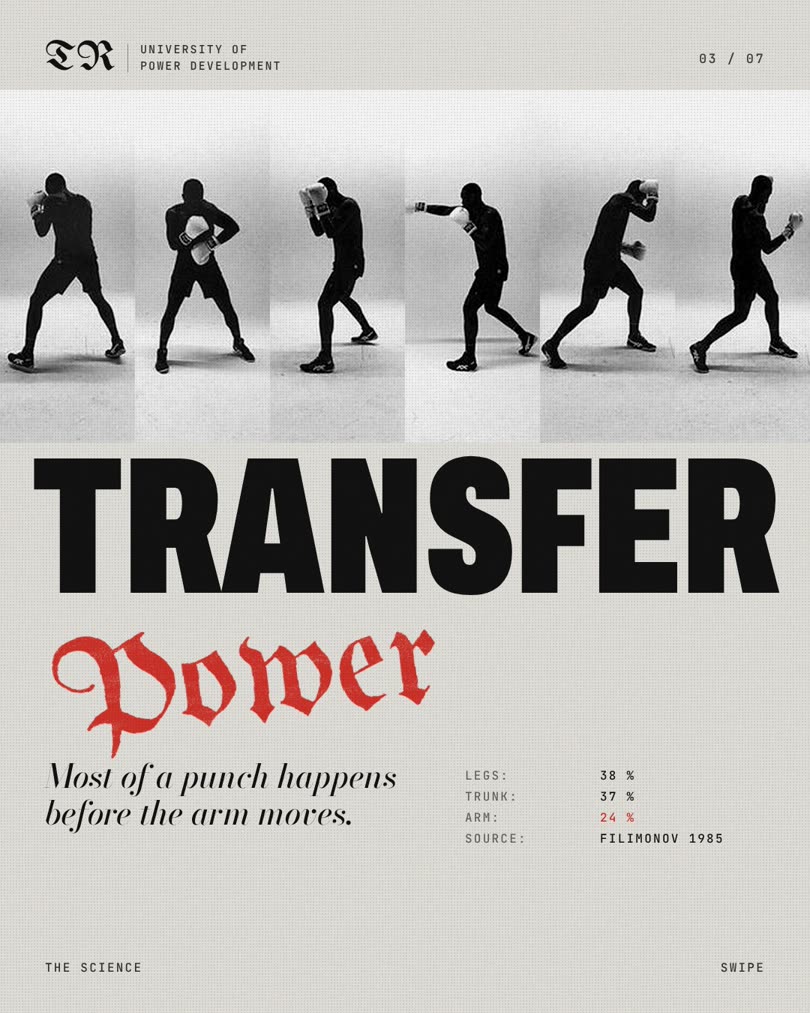
A punch is not an arm movement. In the best known study of where its force comes from, the legs gave about 38 percent, the trunk 37 and the arm 24 (Filimonov and colleagues, 1985). Three quarters of a punch happens before the arm moves.
That is the idea behind the name of his method, Full-Body Power Transfer: train the transfer, not only the parts.
05The chain.
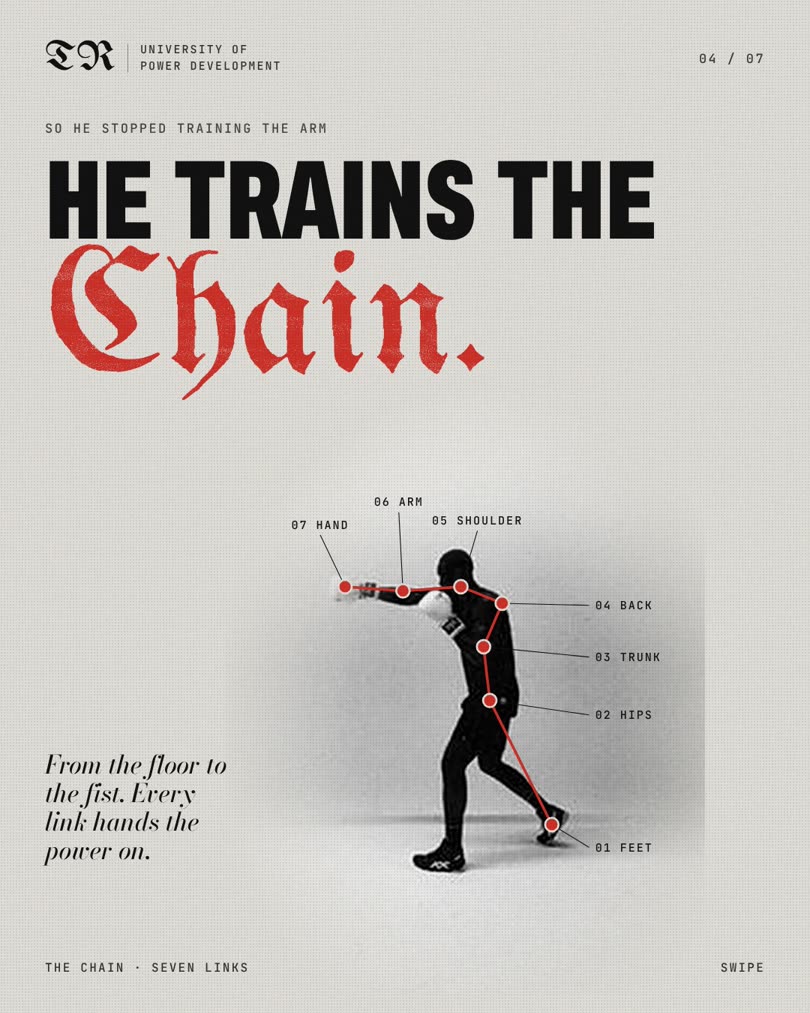
Feet, hips, trunk, back, shoulder, arm, hand. Power starts at the ground: the feet push and everything above them answers. The hips lead, and the turn begins there before anything else moves. The trunk carries it, the back holds the shape under load, the shoulder hands it over, and the hand arrives last.
A link that leaks costs the punch. A strong arm on a chain that leaks still lands soft. It is the name of his gym, drawn on a body.
06In order.
His notes put the build in a fixed order. First a base of stability and strength, because power needs something to stand on. Then proprioception, knowing where the body is and what it is doing without looking. Then the skill of each exercise, learned before it is loaded. Then the connection of mind and body, feeling the muscle you ask to work. Then power.
In that order. Skip a step and the next one has nothing to stand on.
07The right day.
The rule that runs through all of it: the right work at the right time, at the right volume, with progression from one day to the next. Not all out every day. All out on the day it counts.
He said it in 2013 already, to the Los Angeles Times: “You can’t be hard just to be hard.” Hard for its own sake ends in overtraining or an injury. Today he says it shorter.
“Not kill kill kill every day.
But making sure when it’s time to kill… ya do.”
08Full speed.
Heavy lifts build force at low speed. A fight happens at full speed. The end of the curve where a punch lives needs its own training: fast, rotational, wired to the timing of the turn. That is why his sessions put the barbell next to the medicine ball, the band and the slam.
09The head.
Most of training happens in the head, he told the Los Angeles Times. Without the right attitude nobody makes it, and most people have never seen what they can do: “No one ever truly knows what they are capable of until someone helps them to see what they can do.”
He spoke of people who came in without making eye contact, and of performers who were nervous, until a few clear instructions showed them they could. Find the strengths, build the weaknesses, and never make it a shaming thing. The training was meant to reach past the gym, into the rest of a life.
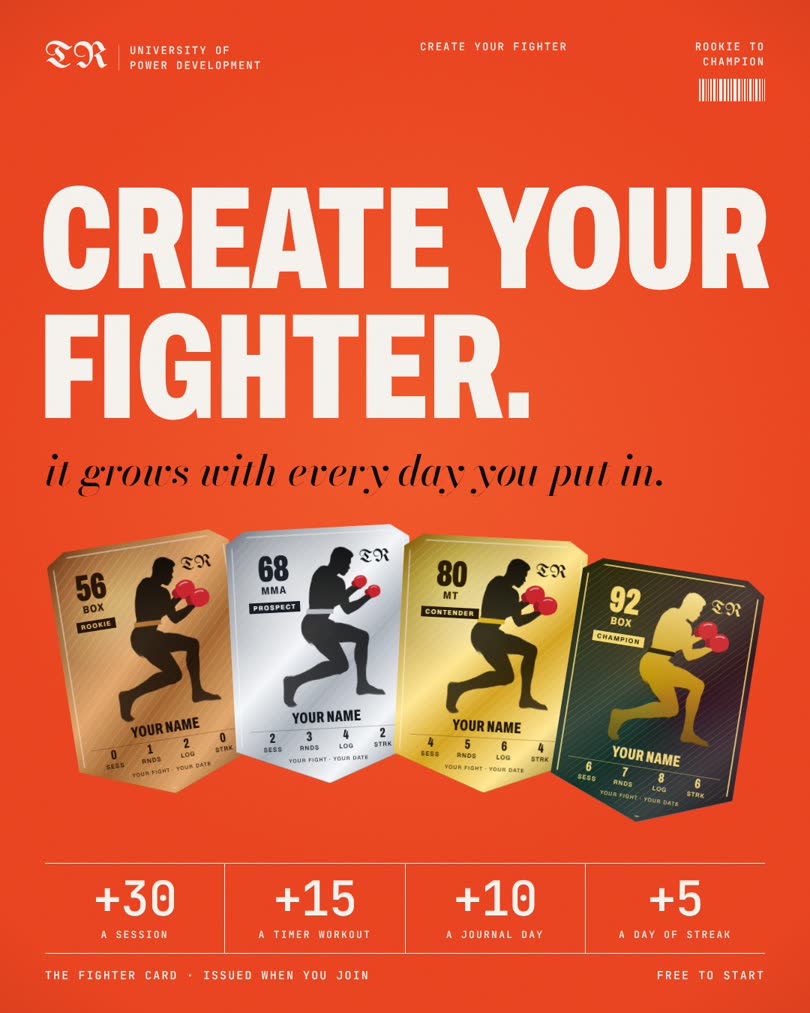
That is why the fighter card on his platform rates the work, and never the person.
“We all have
weaknesses.”
10Keep it real.
On food he had no time for trends. No zero carb: a body needs a balance of protein, fat and carbohydrate. Nothing extreme either: nobody can keep it up, and the swing back comes anyway. People need to keep it real, he said.
His rule was eighty to twenty: eighty percent good, twenty percent not as good, fitted to the life of the person, whether that is an office, a tour or dinners out. Wine and pizza with friends, then back to eating well the next day. It comes down to being honest with yourself.
His secret recipe, he said then, was four words.
“Diet and exercise
work.”
11A week.
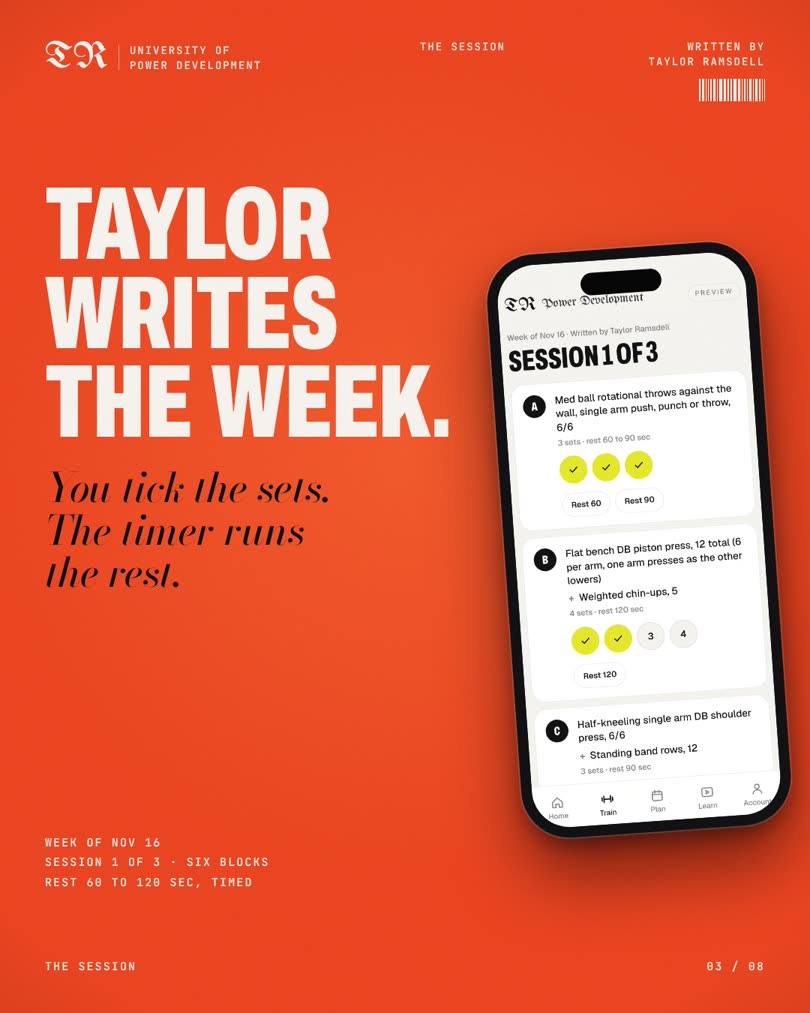
His session for the week of 16 November, written for an athlete who trains online, has six blocks. Medicine ball rotational throws against the wall, six each side. A dumbbell piston press, then weighted chin-ups. A half kneeling single arm shoulder press with band rows. Face pulls with the Pallof press. Reverse crunches with a side plank. Kneeling ball slams with standing band rotations. Rest between sixty and one hundred and twenty seconds, timed.
Rotation first, while the body is fresh. Strength in the middle. The trunk at the end. The order is the method.
12The place.
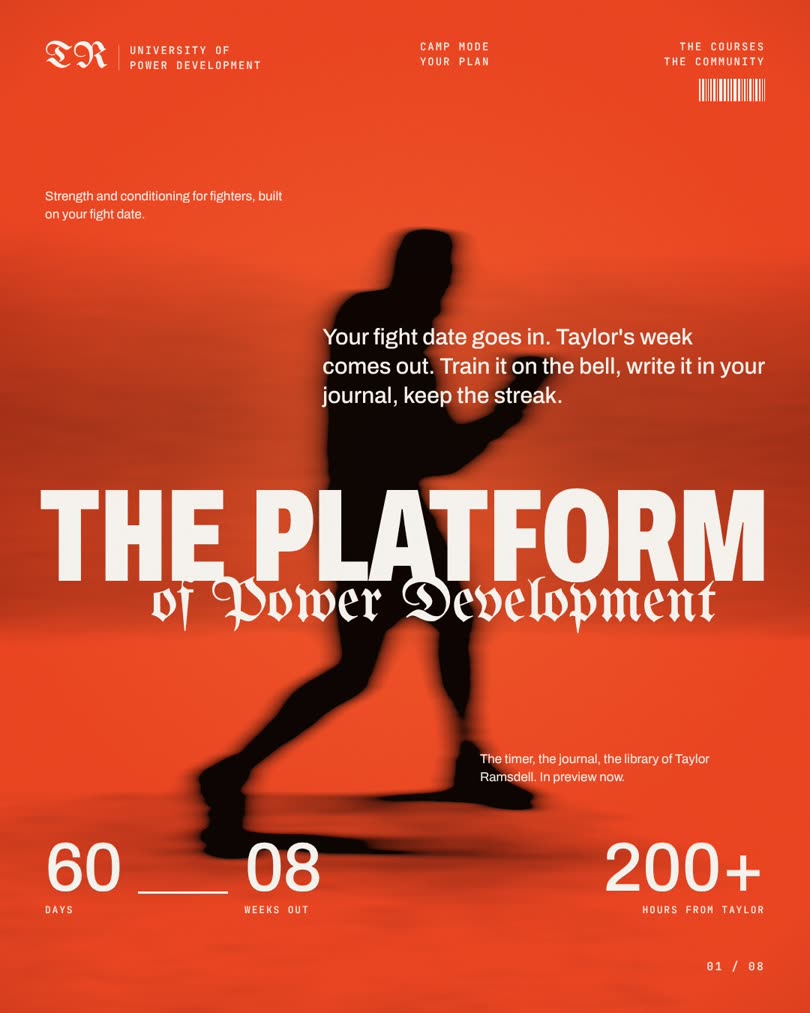
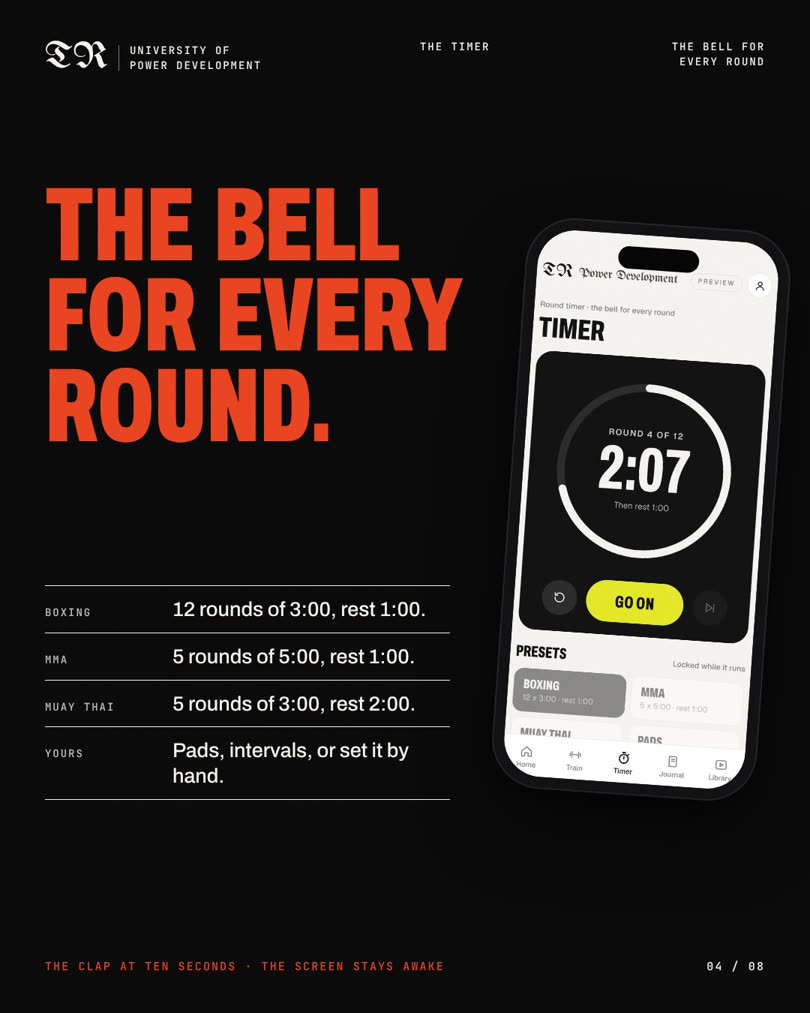
His work has a home now: University of Power Development. A platform with the session of the week, a round timer, a daily journal, a library of his lessons and a fighter card that grows with every day of work. It opens to the public soon.
The rule of Chain Fitness holds here too. The ego stays at the door.